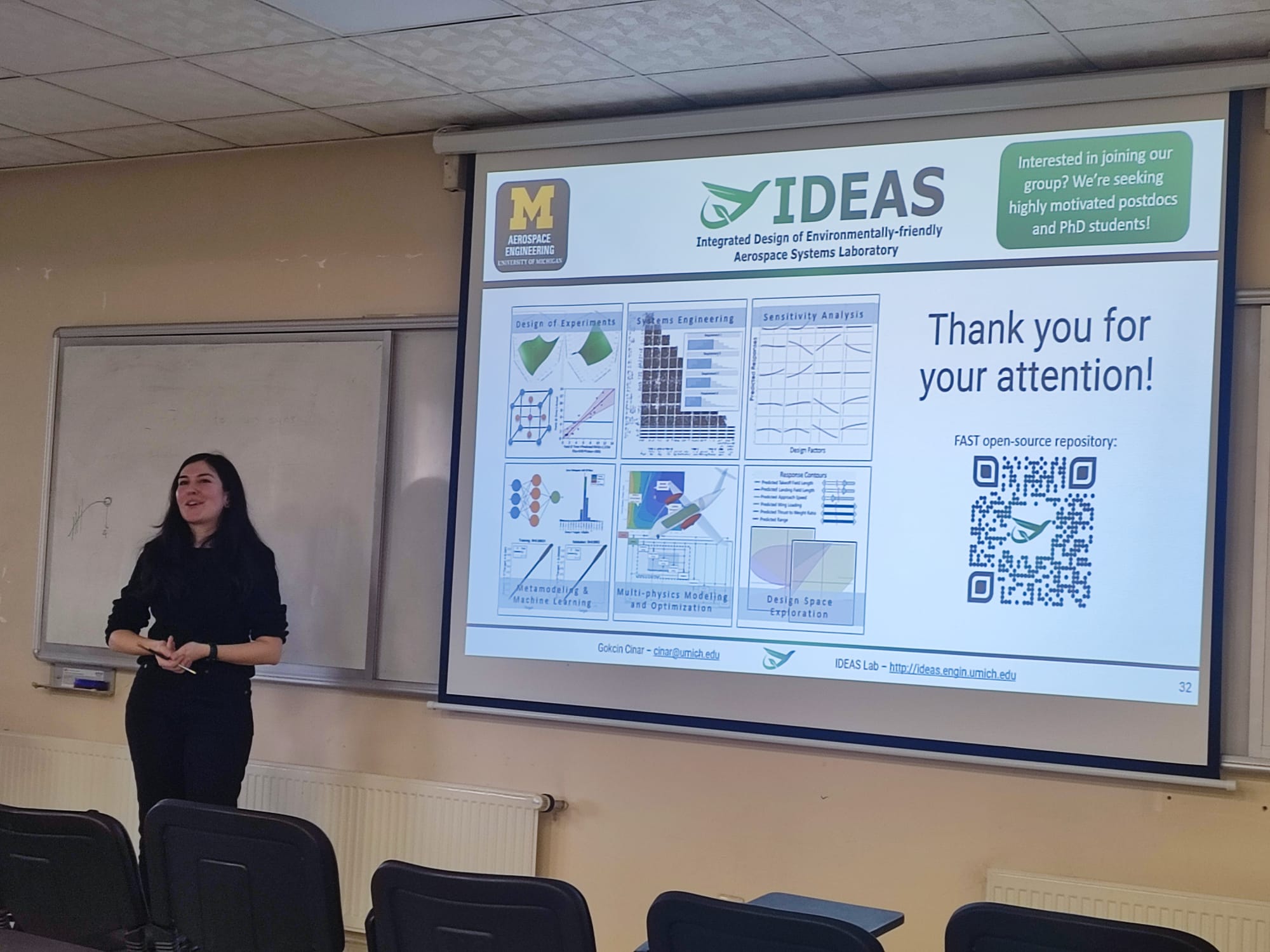
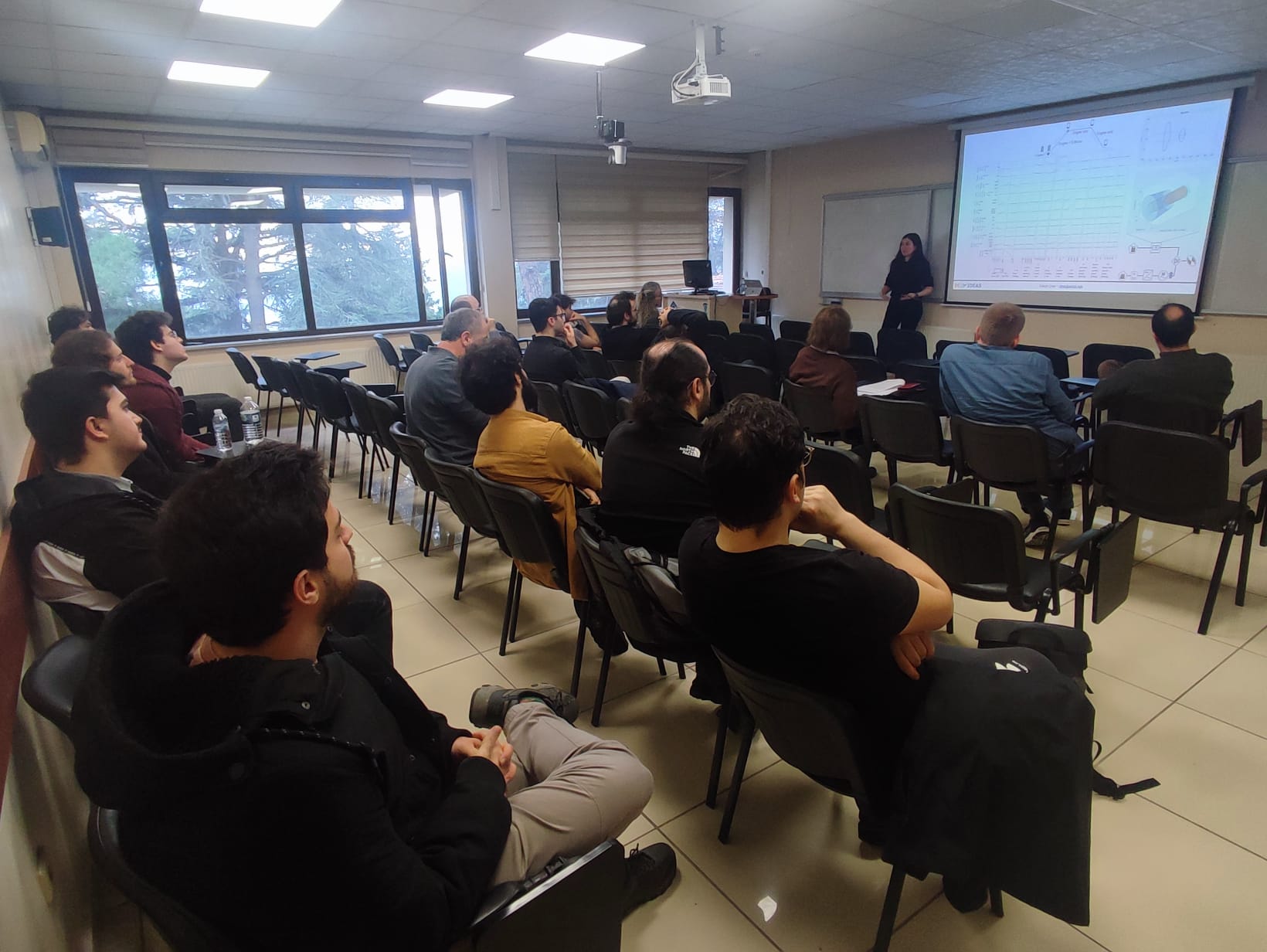
Designing the Future of Flight: Computational Advances for Net-Zero Aviation
Gökçin Çınar | Assistant Professor
Principal Investigator, Integrated Design of Environmentally-friendly Aerospace Systems (IDEAS) Lab
Chair, AIAA Electrified Aircraft Technologies Technical Committee
Department of Aerospace Engineering | College of Engineering | University of Michigan
Web: https://gokcincinar.com
Principal Investigator, Integrated Design of Environmentally-friendly Aerospace Systems (IDEAS) Lab
Chair, AIAA Electrified Aircraft Technologies Technical Committee
Department of Aerospace Engineering | College of Engineering | University of Michigan
Web: https://gokcincinar.com
Title: "Designing the Future of Flight: Computational Advances for Net-Zero Aviation"
Date: December 25th, Wednesday
Time: 11:00Place: VYKM-2
Bio: Dr. Gökçin Çınar is an Assistant Professor of Aerospace Engineering at the University of Michigan and the Director of the Integrated Design of Environmentally-friendly Aerospace Systems (IDEAS) Laboratory. Her research centers on systems design, integration, and optimization of aerospace technologies, with a focus on future aircraft concepts for sustainable aviation and electrified propulsion. Over the past decade, she has developed computational tools and methods adopted by academia, government, and industry, promoting a systems-level approach to assessing the environmental impact of aircraft design and operations. She is the recipient of the 2024 International Sustainable Aviation and Energy Research Society (SARES) Young Scientist Award and has authored three AIAA and IEEE best papers for her novel contributions to design space exploration and optimization of electrified aircraft. She is a co-founder and leads the Michigan Initiative for Sustainable Aviation (MISA), which fosters multidisciplinary collaboration to address aviation's environmental challenges. She chairs the AIAA Electric Aircraft Technologies Technical Committee and serves on the AIAA Aviation Forum Guiding Coalition. For the past several years, she has held various leadership positions in the AIAA/IEEE Electric Aircraft Technologies Symposium (EATS), most recently serving as Chair of EATS 2024.
Abstract: Achieving net-zero emissions in aviation by 2050 demands a transformative approach to aircraft and propulsion system design, as well as a re-evaluation of operational strategies. At the Integrated Design of Environmentally-friendly Aerospace Systems (IDEAS) Lab at the University of Michigan, we explore the new aircraft design space created by revolutionary aerospace technologies, such as electrified and hydrogen propulsion, to maximize environmental and performance benefits by combining by combining physics-based modeling with advanced data-driven methods, including machine learning and surrogate modeling.
This seminar will present our latest computational advancements in integrating alternative energy sources, such as battery and fuel cell systems, within hybrid-electric propulsion architectures to optimize energy storage, mission planning, and power management. Supported by funding from NASA, we have developed computational tools—including the recently released open-source Future Aircraft Sizing Tool (FAST)—to support design flexibility across propulsion architectures, enabling early-phase sizing and data-driven projections of key performance parameters. By leveraging these tools and methods, we address the system-level challenges of propulsion system electrification, focusing on how these novel architectures open new design spaces for hybrid-electric aircraft. Additionally, we explore how integrating hybrid-electric designs with specific fleet operations, mission profiles, and ground power requirements can maximize operational efficiency.
This seminar will present our latest computational advancements in integrating alternative energy sources, such as battery and fuel cell systems, within hybrid-electric propulsion architectures to optimize energy storage, mission planning, and power management. Supported by funding from NASA, we have developed computational tools—including the recently released open-source Future Aircraft Sizing Tool (FAST)—to support design flexibility across propulsion architectures, enabling early-phase sizing and data-driven projections of key performance parameters. By leveraging these tools and methods, we address the system-level challenges of propulsion system electrification, focusing on how these novel architectures open new design spaces for hybrid-electric aircraft. Additionally, we explore how integrating hybrid-electric designs with specific fleet operations, mission profiles, and ground power requirements can maximize operational efficiency.
Wednesday, December 25, 2024 - 11:00
Fotoğraflar: