Royal Group Meeting - Intelligent Systems Laboratory
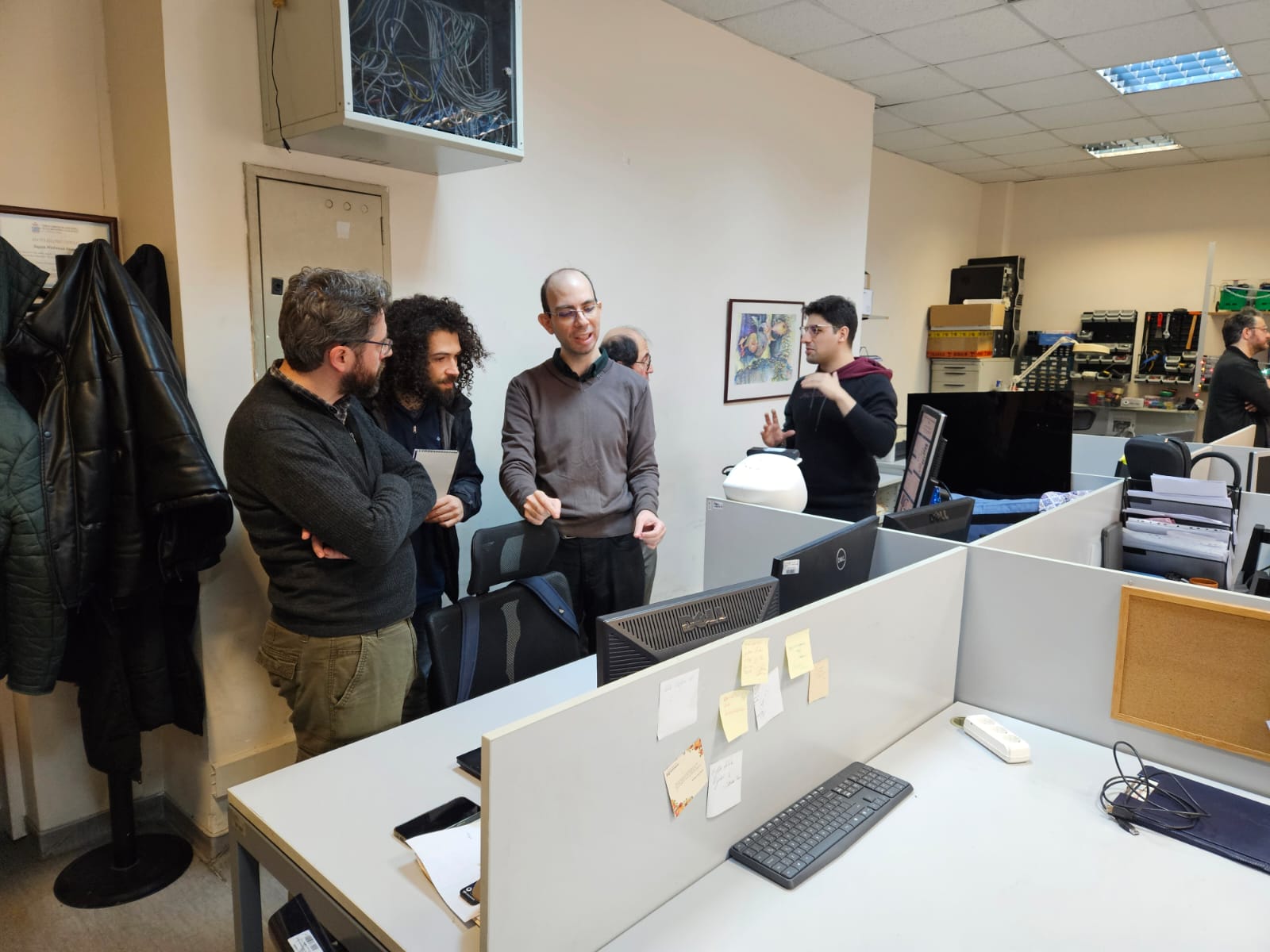
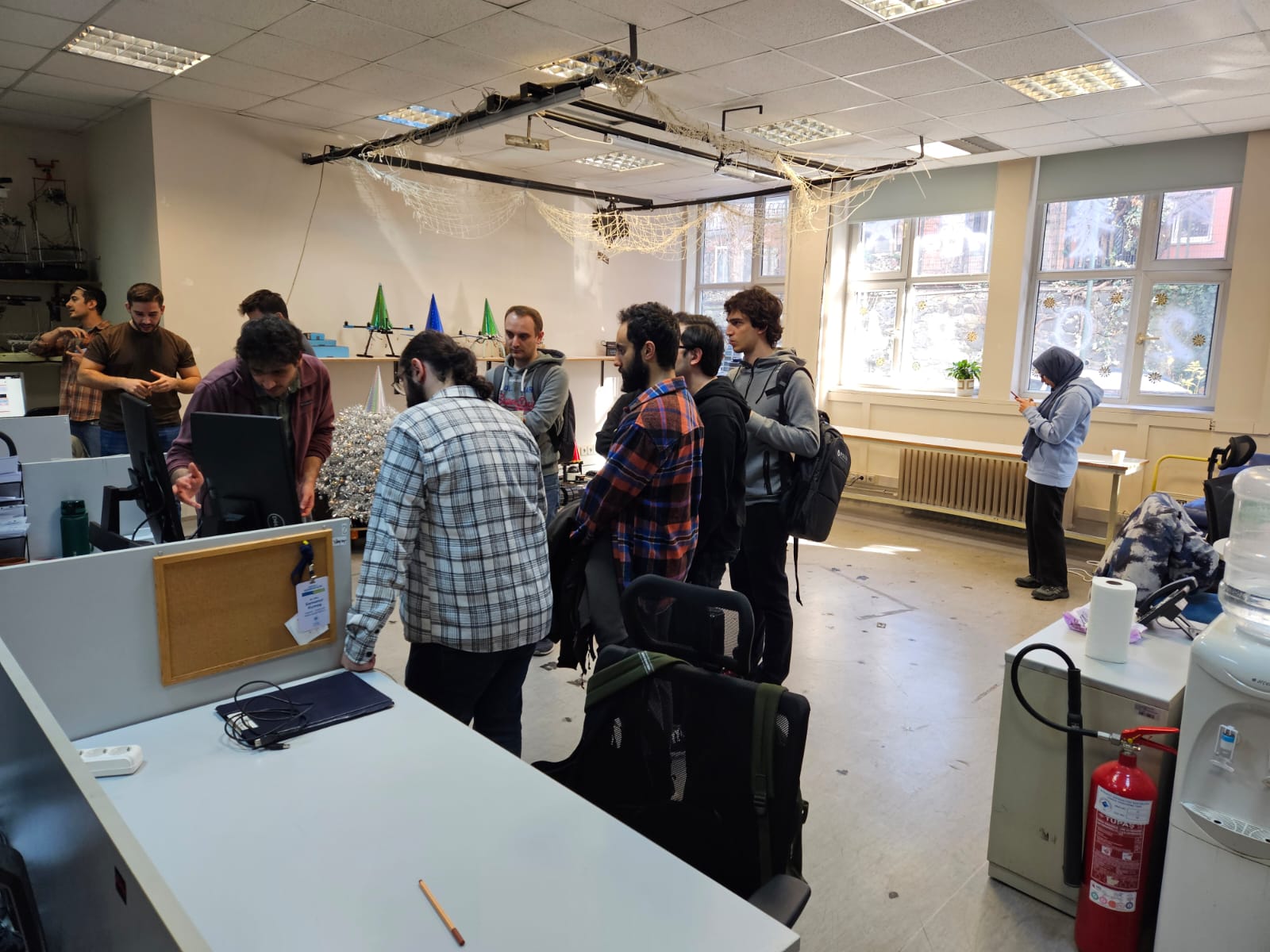
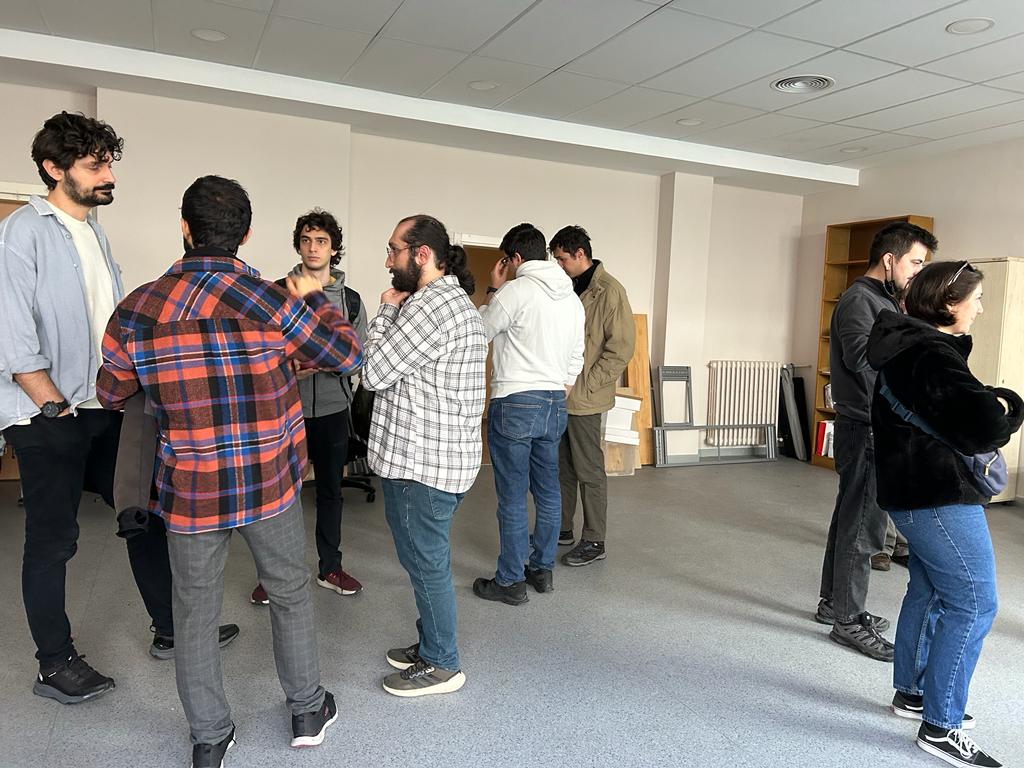
We held our second meeting as the ROYAL group on January 05, 2024. We had the opportunity to celebrate the new year!
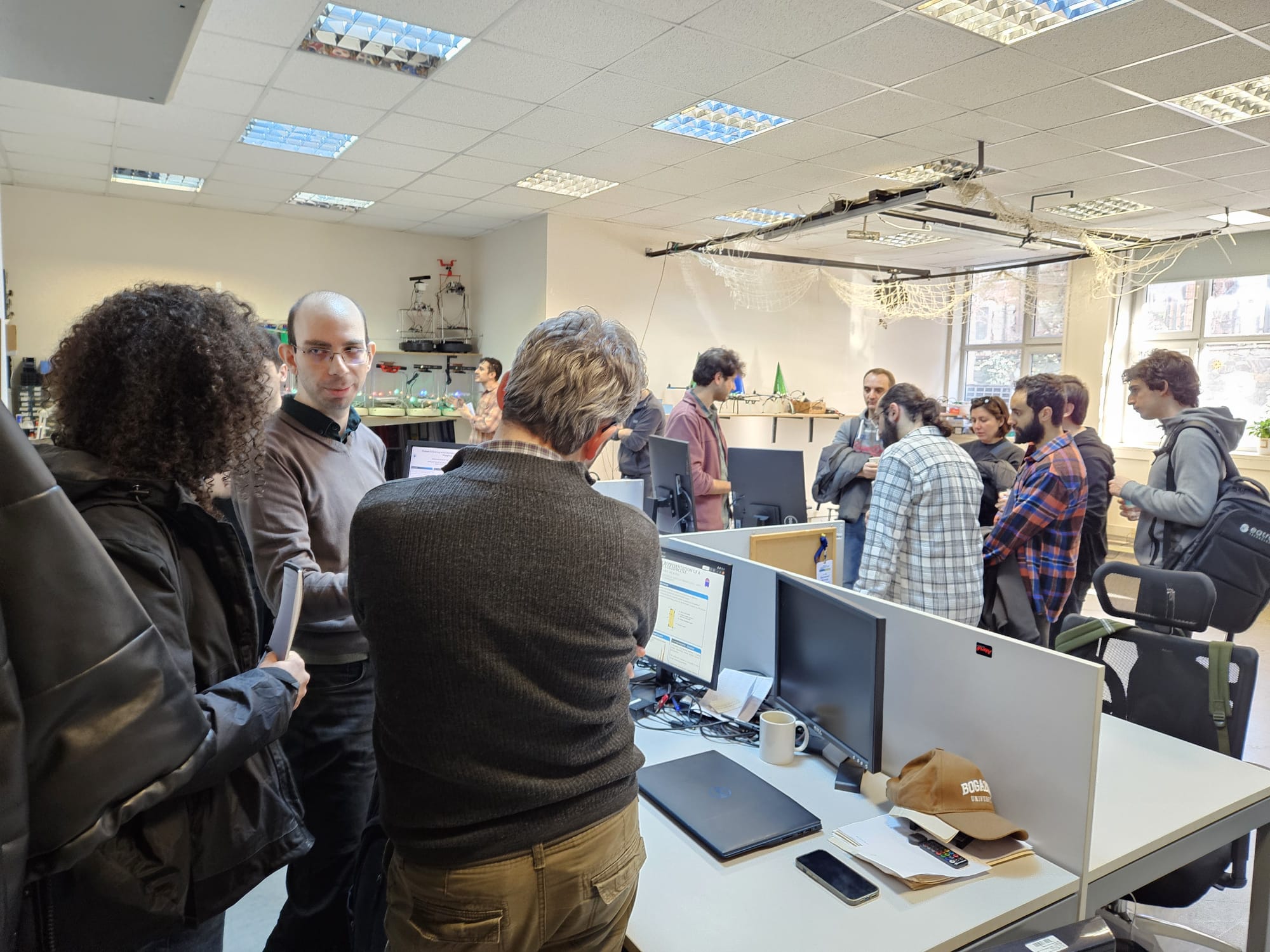
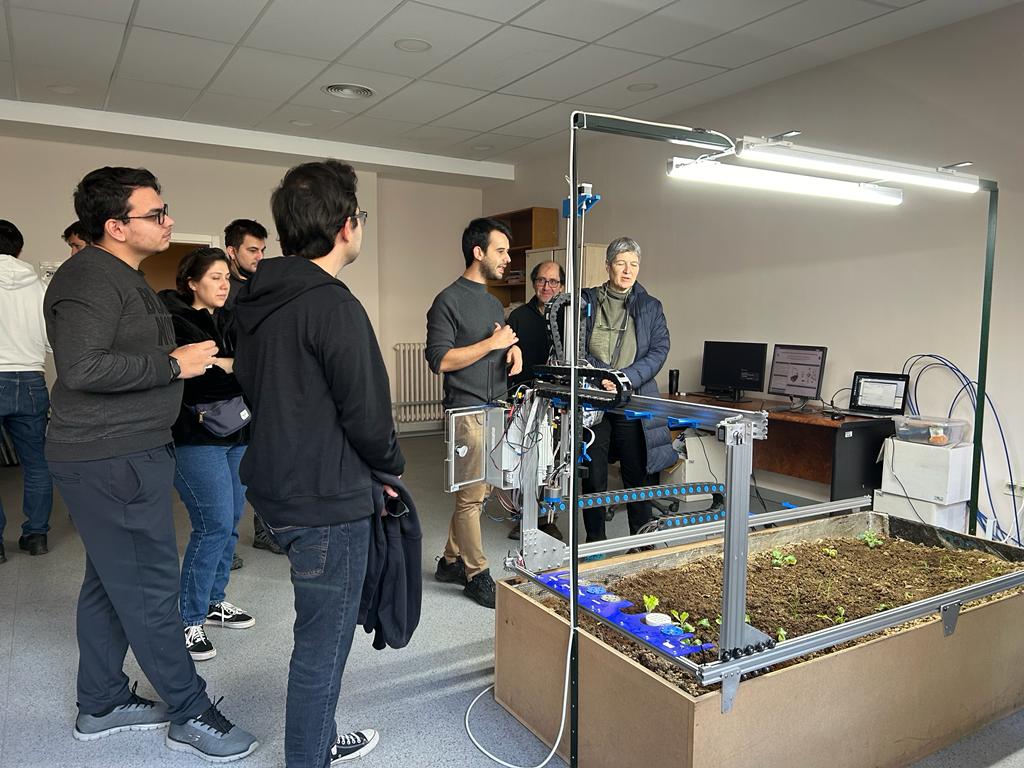
The meeting was held in the Intelligent Systems Laboratory (ISL) at the Electrical Engineering Department. Under the supervision of Prof. Işıl Bozma, the main research areas of ISL are robotics, machine vision, spatial cognition, multi-robot systems, and game theory.
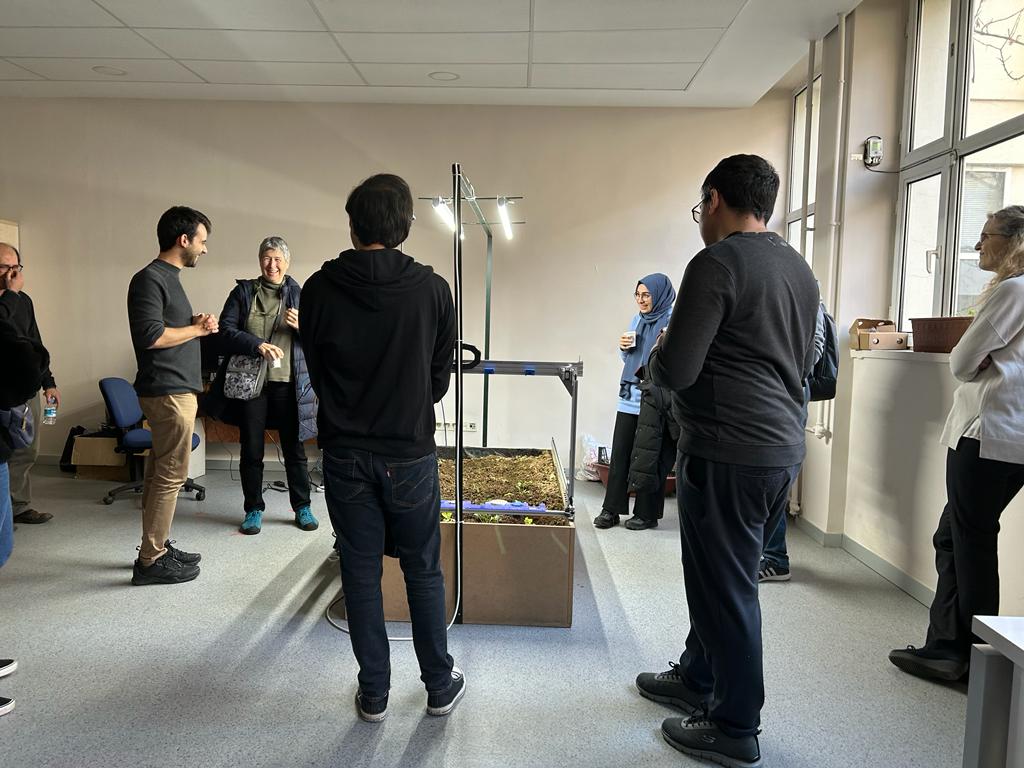
The lab members presented their recent work in a poster session. PhD candidate Serhat İşcan presented his latest work that will enable a human-following robot to identify its environment with static features. In this work, a global equivalence method is proposed, which is applied during the descriptor generation phase to avoid the possible negative effects of the human being being followed or moving objects in the scene on the scenarios of recognizing or exploring the environment. This method has been shown to be up to ten times faster than alternative methods. MSc student Yunus As presented his work named " DRL Based Exploration and Planning ", which is about exploration with Reinforcement Learning (DRL): Achieving optimal performance and high coverage ratio. The depth-centric approach, complementing DRL-trained models, excels in determining efficient directions and points for reaching the next goal with environment adaptation. MSc Student Semanur Kumaş presented her work named “Object Cognition in Scenes”, it is about understanding objects in the scene by identifying and tracking object candidates with segmentation. MSc student Arif Yılmaz presented his work named “Plant Monitoring of an Indoor Polyculture Garden”. It is about monitoring plants’ growth and health status in an indoor polyculture garden by collecting RGB images of them and creating the Gazebo simulation of TarRob. MSc student Süleyman Batuhan Vatan presented his work “Human Following with Environmental Sensing and Mapping”, our goal is to follow a human target with a socially compliant mobile robot. The problem arises from the target human's visibility: the target human may not always be visible due to obstructions like corners and doors. We aim to overcome this kind of phenomenon that may cause failure, by creating a spatio-temporal mapping to recover from these types of failures. MSc. Ahmet Harun Eker presented his work titled “Aerial Robot - Ground Robot Coordination for Spatial Mapping and Analysis” and it is about Aerial robots (AR) that can be used for surveys, logistics, inspection, etc. However, they have very limited operation times. To overcome this issue, a mobile ground robot (MGR) is used in coordination with the AR to replace its battery, while the AR helps its navigation by providing road networks for the MGR. BSc student İsmail Eren Küçükali presented his work “Low-Cost LiDAR”. This project focuses on developing a low-cost 3D environmental sensing system using a one-dimensional laser sensor mounted on a pan-tilt mechanism. The goal is to enhance data collection efficiency, increase data intensity, and implement intelligent features for dynamic speed adjustment.